Improving access to a nationwide WiFi hotspot network
Role
Lead Designer — Research, strategy, visual design
Team
PM, Business, UXR, PD, UXR, Engineering, Data
Timeline
~1.5 months

The approach
We combined analytics, surveys, interviews, usability testing, and an end-to-end journey audit to identify the barriers preventing activation. The research revealed nearly 30 seconds of system latency before users could begin navigation, along with three key barriers preventing successful activation:
~73% of login failures were caused by missing or forgotten credentials.
Loading times were perceived as system failures rather than progress.
Users didn't understand the value of the service or how to access it.
The Solution
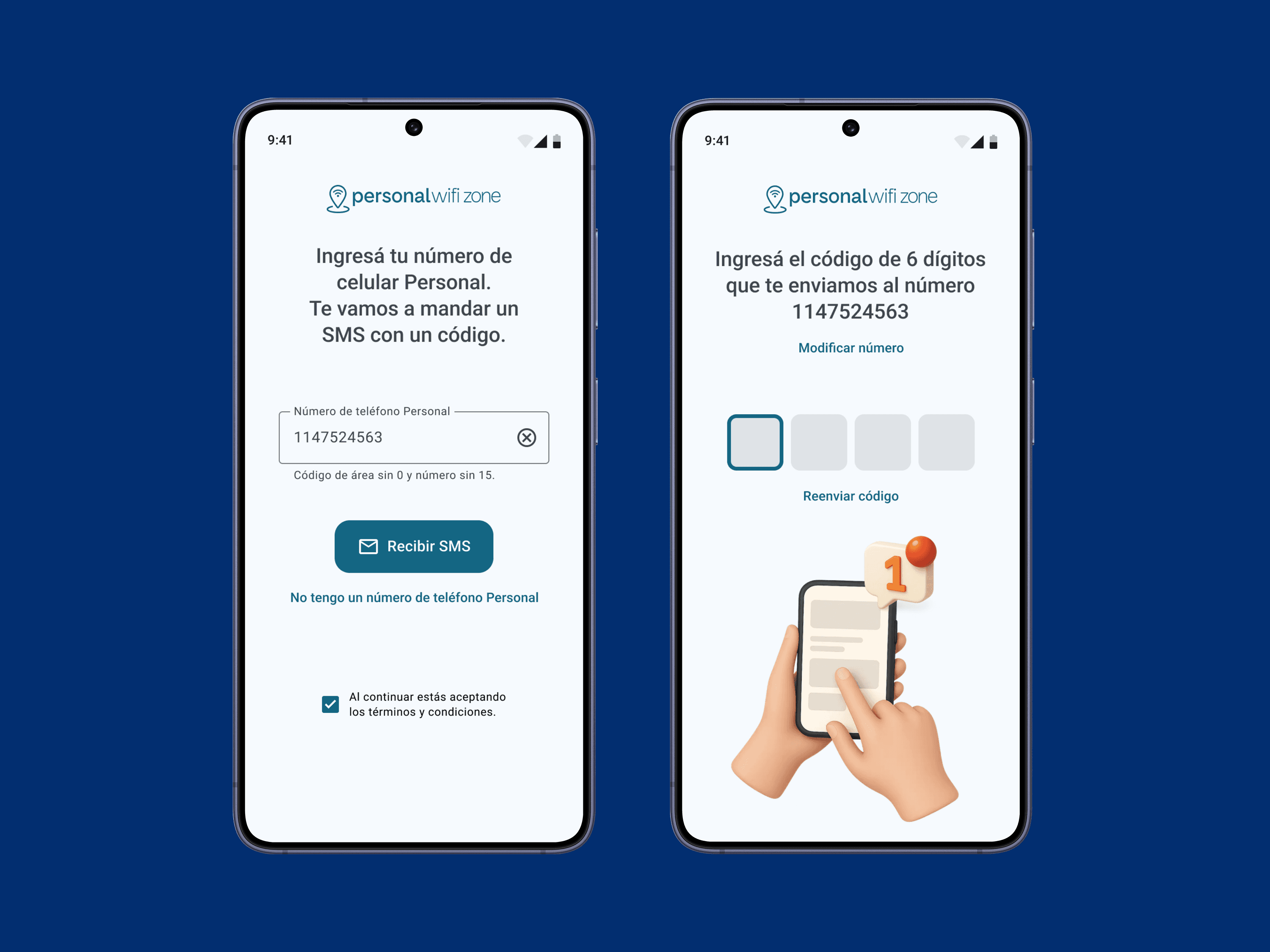
OTP as the primary login method
We redesigned authentication around one-time passwords (OTP), eliminating credential confusion and reducing friction during first-time access.
Clarifying long connection states
Because latency couldn't be reduced, we focused on improving the experience around it. Clearer loading states, better system feedback, and more transparent recovery paths helped users understand what was happening and maintain confidence throughout the process.
Introducing in-app CES surveys
Because usage was highly context-dependent, we introduced lightweight in-app CES surveys triggered after connection, login, and disconnection events. This created a continuous feedback loop and provided more reliable insight into real-world usage.
Building the design system
We created a design system with reusable components and design tokens to improve consistency and scalability.

THE OUTCOME
The redesign increased adoption, strengthened trust, and improved engagement across the company ecosystem.
2.7x increase in first-time activation
+98% login success rate
~42% post-login drop-off rate
MORE ProjectS